Legibility
Whether your name can be read. A clear signature is traditionally linked to openness; a stylised one to privacy.

AI signature analyzer
Sign on plain paper. Avoid cheques, contracts or ID documents.
Sign the way you usually do, with a dark pen on white paper. A practice signature is fine.
Take a close, sharp photo from above, or scan the QR code on a computer to use your phone camera.
Get a short summary and a card for each feature of your signature, with reflection questions to think about.
Real sample report
To show how the signature analyzer behaves, we ran it on a public-domain reproduction of Abraham Lincoln’s signature on 11 November 2026. The output below is unedited. It describes traditional associations with the shapes on the page; it is not a statement about Lincoln as a person. The source image is only 218×65 px, so we enlarged it to 1073×320 px before upload; note how the reading flags that pen pressure cannot be judged reliably from a reproduction.
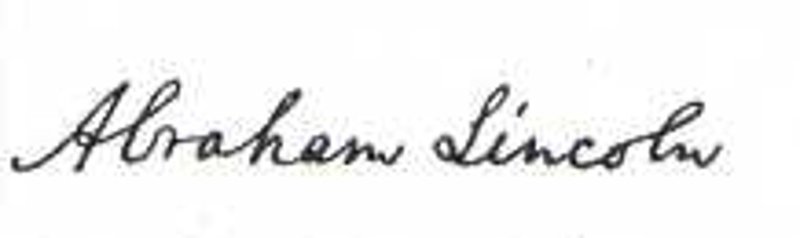
In traditional graphology, this signature may suggest an expressive, individualistic, and outwardly confident style. Its prominent initials and decorative flourishes are often associated with a desire for personal distinction and creative expression. The flowing connections may symbolize continuity, while the substantial size may suggest comfort with visibility. These are playful interpretive associations rather than scientifically established personality indicators.
Seen: The signature is moderately readable, with recognizable cursive letterforms but considerable decorative styling.
Traditional reading: Some graphologists associate moderate legibility with balancing personal expression and a desire to remain recognizable. The decorative writing may suggest an individual style.
Seen: The signature is relatively large, extending across most of the available horizontal space.
Traditional reading: Large signatures are often associated with expressiveness, visibility, and confidence in traditional graphology. They may suggest a preference for making a noticeable impression.
Seen: Most letters lean noticeably toward the right.
Traditional reading: A rightward slant is often associated with outward expression, enthusiasm, and interpersonal engagement. Some graphologists read this as an inclination toward connecting with others.
Seen: Both initials are substantially taller than the surrounding lowercase letters and feature prominent loops.
Traditional reading: Emphasized capital letters are traditionally associated with self-expression and personal presence. Their elaborate styling may suggest an appreciation for individuality.
Seen: Letters are predominantly connected in flowing cursive within each word, with a clear separation between the two words.
Traditional reading: Connected handwriting is often associated with continuity and an integrated approach to expression. The separation between words may suggest some preference for distinguishing different elements.
Seen: The signature features decorative initial loops, extended entry strokes, and small dots above the relevant letters.
Traditional reading: Elaborate flourishes are often associated with creativity, expressiveness, and attention to personal presentation. Some graphologists interpret decorative details as a desire for individuality.
Seen: The strokes appear dark and relatively bold, although actual writing pressure cannot be established reliably from this image.
Traditional reading: Heavier-looking strokes are traditionally associated with determination and energetic expression. This interpretation is especially tentative because image contrast and reproduction quality affect apparent darkness.
The details in your writing
Visible features, explained clearly.
Whether your name can be read. A clear signature is traditionally linked to openness; a stylised one to privacy.
How large the signature is relative to normal writing. Often associated with self-presentation and confidence.
Whether it leans or rises across the page. Commonly read as a hint of outlook and emotional expression.
How prominent the first letters are. Large initials are often connected to pride in one’s name and identity.
Extra loops, strokes, dots or underlining. Traditionally seen as a wish to stand out or to add emphasis.
Whether letters flow together, and how thick or dark the strokes look. A photo only gives visual hints about pressure, not a measurement.
A signature is a short mark you repeat many times, so graphologists read it a little differently from everyday handwriting.
Traditionally, the signature is read as how you present yourself to others, while a page of normal writing is read as how you work day to day. Comparing the two is a classic exercise, so try both tools.
Signatures are short, so spacing and baseline say less. Legibility, the size of capitals, flourishes and underlines carry more weight in a signature reading.
This analyzer does not check whether a signature is genuine, forged or legally valid, and it should never be used for that. For document signing or verification, use a proper e-signature or forensic service.
Sign a fresh sample on blank paper rather than photographing a cheque, contract or ID. We delete the photo after analysis, but there is no reason to share a signed document.
Signature analysis is the part of graphology that focuses on how you sign your name. Because a signature is something you repeat many times, graphologists see it as the way you present yourself to others, and compare features such as size, legibility, capitals and flourishes.
Traditionally, a large signature is linked to confidence, a legible one to openness, a rising one to optimism, and strong flourishes or underlines to a wish to be noticed. Our analyzer describes which of these features appear in your signature and offers a gentle reading of each. It is a reflective exercise, not a verdict.
No. Graphology, including signature analysis, has not been validated as a way to measure personality, and we make no accuracy claims. Enjoy it as entertainment and self-reflection, and never use it to make decisions about anyone.
Your photo is used only for the analysis and then deleted (anything left by an error is removed automatically within 24 hours); we do not save the result. Still, a signature is personal, so feel free to sign a practice version on scrap paper rather than photographing an official document.
Sign naturally on plain white paper with a dark pen, then take a close, sharp photo from directly above in good light. Fill most of the frame with the signature and avoid shadows.
New accounts usually get one free analysis (limited per network to prevent abuse, so an account on a shared network may not get one). After that, each signature or handwriting analysis uses 1 credit from a one-time credit pack; there is no subscription, and the credit goes back to your balance if an analysis fails. See the pricing page for current packs.
Handwriting analysis looks at several lines of everyday writing: spacing, baseline and margins. Signature analysis looks at a single, highly practised mark: legibility, size, capitals and flourishes. Comparing the two is a classic graphology exercise, so try both.
AI describes visible writing patterns. Traditional interpretations are for entertainment and self-reflection. Graphology is not a scientifically validated psychological test: do not use a reading for hiring, medical, legal, financial or any other decision about yourself or others, and do not upload someone else’s writing without their permission.
Letter shapes, spacing, slant and connections.
A starting point for reflection, never a verdict.
Curious about your everyday writing too? Try the handwriting analyzer.
Built and maintained by William ZZ, Founder.