
Handwriting Pressure Meaning: Heavy, Light and Variable
Explore handwriting pressure meaning, how to check paper grooves, and three real analyzer runs on public-domain letters in pencil and ink.
By William ZZ, Founder · Published 2026-11-13
Handwriting pressure is the force of the pen on paper. A photo shows stroke darkness and width, not force, so feel or look for grooves on the back of the page to check the physical trace. In graphology, a tradition rather than a validated test, heavy pressure is read as commitment and taking things seriously, and light pressure as sensitivity and empathy, as in this Businessballs graphology summary.
Try the Handwriting Analyzer and compare its visible observations with your paper check.
What handwriting pressure is and how to check it
Handwriting pressure is the force of the pen or pencil against the paper. Start with the original sheet rather than a photograph:
- Check the back: Turn the page over and gently feel for grooves or indentation. Look under raking light, with a light coming from the side at a low angle, to make the surface relief easier to see.
- Check the next sheet: If you wrote in a pad, look at the sheet underneath for impressions. An impression is a clue, not a force measurement.
- Keep materials the same: Compare stroke darkness and width only with the same pen on the same paper. Treat them as appearance clues.
Why photos mislead: Pencil, ballpoint and fountain or dip pens make different marks. Ink flow, paper absorbency, phone exposure and filters can alter apparent darkness or width.
Dellavalle, F. & Frontini, S., “A preliminary study of 3D depth measurement of the grooves generated by three different pens for handwriting”, Journal of the American Society of Questioned Document Examiners 20(2), 2017, states:
The inking of the stroke might not be directly correlated with the degree of indentation in the paper.
Heavy, medium, light and variable pressure: traditional readings
Heavy pressure
You may feel distinct grooves on the reverse; the front may also have dark, substantial strokes. Graphologists traditionally link heavy pressure with commitment and taking things seriously (Businessballs graphology summary). A ballpoint that needs a firm push to keep its line flowing can encourage heavier writing.
Medium pressure
You may feel a modest impression, without deeply embossed lines, alongside fairly even strokes. The graphology summary we cite gives no separate reading for medium pressure, so we do not attach a trait to it. The combination of a familiar pen and an ordinary writing surface can produce this result.
Light pressure
You may feel little indentation; marks can look delicate or pale, depending on the instrument. Graphologists traditionally link light pressure handwriting with sensitivity and empathy (Businessballs graphology summary). A fountain pen that releases ink easily may need little downward force while still leaving a dark line.
Variable (uneven) pressure
Groove depth may change along the line, while stroke darkness or width may vary too. The graphology summary we cite mentions uneven pressure only in passing, so we do not treat it as a separate trait. A change in speed or a pen's uneven ink flow can also produce variation; a photo cannot separate these explanations.
Very heavy pressure that tears or embosses the paper
The sheet has deep relief, pronounced impressions or tears along the strokes. The same summary describes excessively heavy pressure in emotional terms; that is a traditional claim, not a test result. Pressing through a multipart form to make copies is an ordinary reason to bear down; the mark alone does not explain the writer.
← Swipe sideways to see all columns →
Pressure | What you can see or feel | Traditional reading | Common non-personality causes |
|---|---|---|---|
Heavy | Distinct grooves; possibly dark, substantial strokes | Commitment, taking things seriously | Ballpoint needing a firm push |
Medium | Modest impression; fairly even strokes | No separate reading in our source | Familiar pen and surface |
Light | Little indentation; possibly pale or delicate marks | Sensitivity, empathy | Freely flowing fountain pen |
Variable | Changing groove depth or stroke appearance | Mentioned only in passing | Speed changes, uneven ink flow |
Very heavy | Deep embossing, impressions or torn paper | Described in emotional terms; not a test result | Multipart forms, carbon copies |
How pens, paper, grip and speed affect handwriting pressure
Pencil hardness changes the mark: a soft 2B pencil can look darker than an H pencil. Ballpoint, gel and fountain pens differ in ink delivery and the push needed to keep a line moving.
Paper thickness and the backing surface matter too. A soft pad yields differently from a hard desk, and impressions need to be considered in that context. Grip and writing speed change how the tip meets the sheet. Writing on a wall or whiteboard changes the angle and support available; marker width is especially easy to mistake for force. Carbon copies and forms may deliberately require a harder push.
Three real runs: pencil and ink letters
These are three different writers in different years, not one person switching pens. They show what the analyzer can and cannot tell about pressure from a photo.
We ran the site’s analysis code locally, using the same prompt, vision models and safety checks as the live tool, without the account-credit step.
Purple pencil: Captain A. G. Butler's letter, 1918
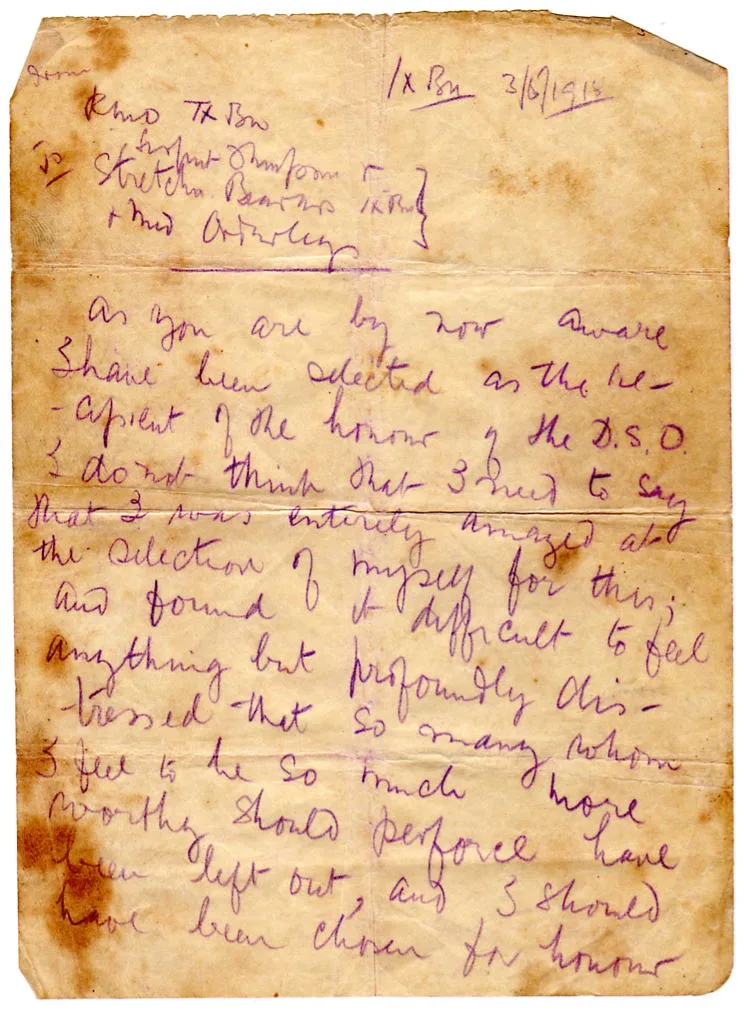

- Input: 744 × 1011 px JPEG.
- Run date: 13 November 2026.
- Time taken: 41.1 s, measured from request start to response for this single local run (not a speed benchmark).
- Mode: handwriting.
Pressure observation (unedited):
The purple strokes appear moderately heavy and dark, although pressure varies and the aged paper makes this assessment approximate.
Pressure reading (unedited):
In traditional graphology, heavier pressure is often associated with intensity and persistence. Some graphologists interpret this as a tendency to invest energy in personally meaningful activities.
Legibility value (unedited):
medium
Shaded ink: an unidentified Civil War soldier's letter to his mother
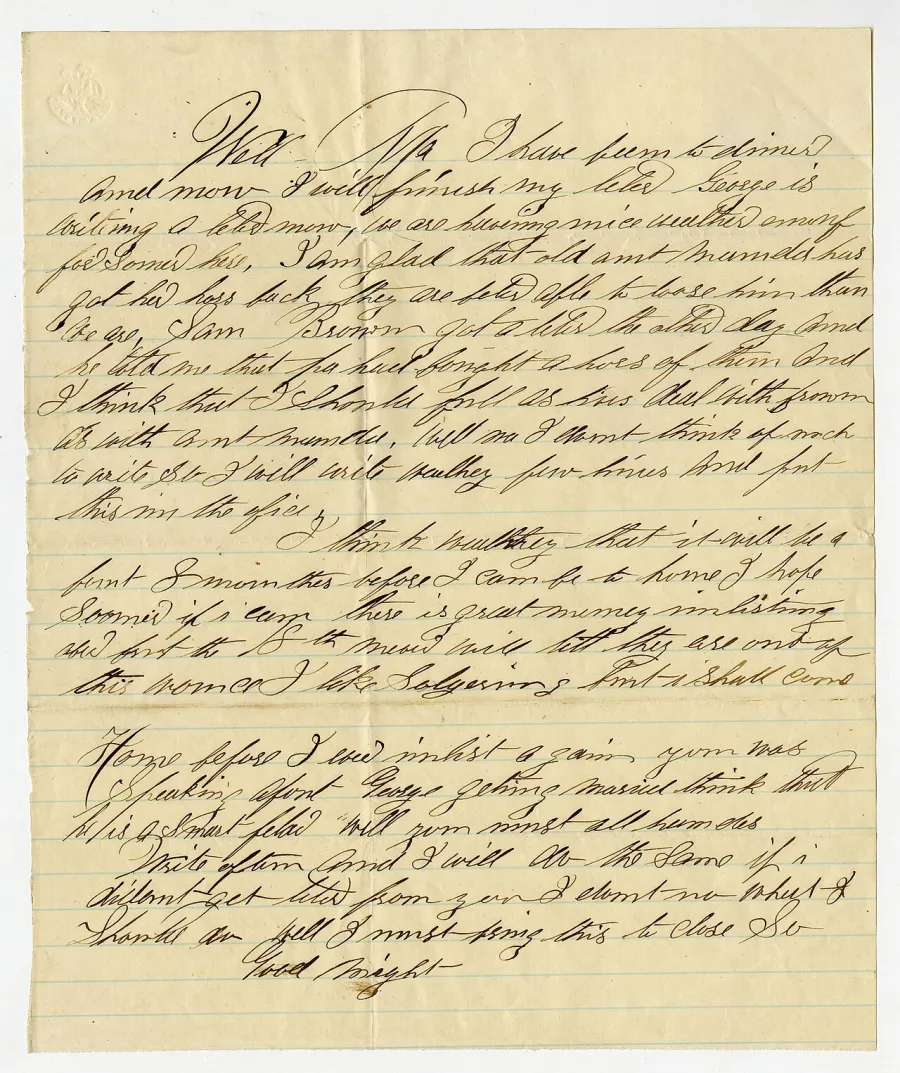

- Input: 1280 × 1525 px JPEG (Wikimedia 1280 px rendition).
- Run date: 13 November 2026.
- Time taken: 49.6 s, measured from request start to response for this single local run (not a speed benchmark).
- Mode: handwriting.
Pressure observation (unedited):
Strokes appear relatively dark and substantial, with visible variations in thickness throughout the writing.
Pressure reading (unedited):
Heavier-looking strokes are traditionally associated with intensity, determination, and strong engagement. Some graphologists interpret variable pressure as expressive energy.
Legibility value (unedited):
medium
Bold brown ink: Alfred Warner's letter to his wife, 1862
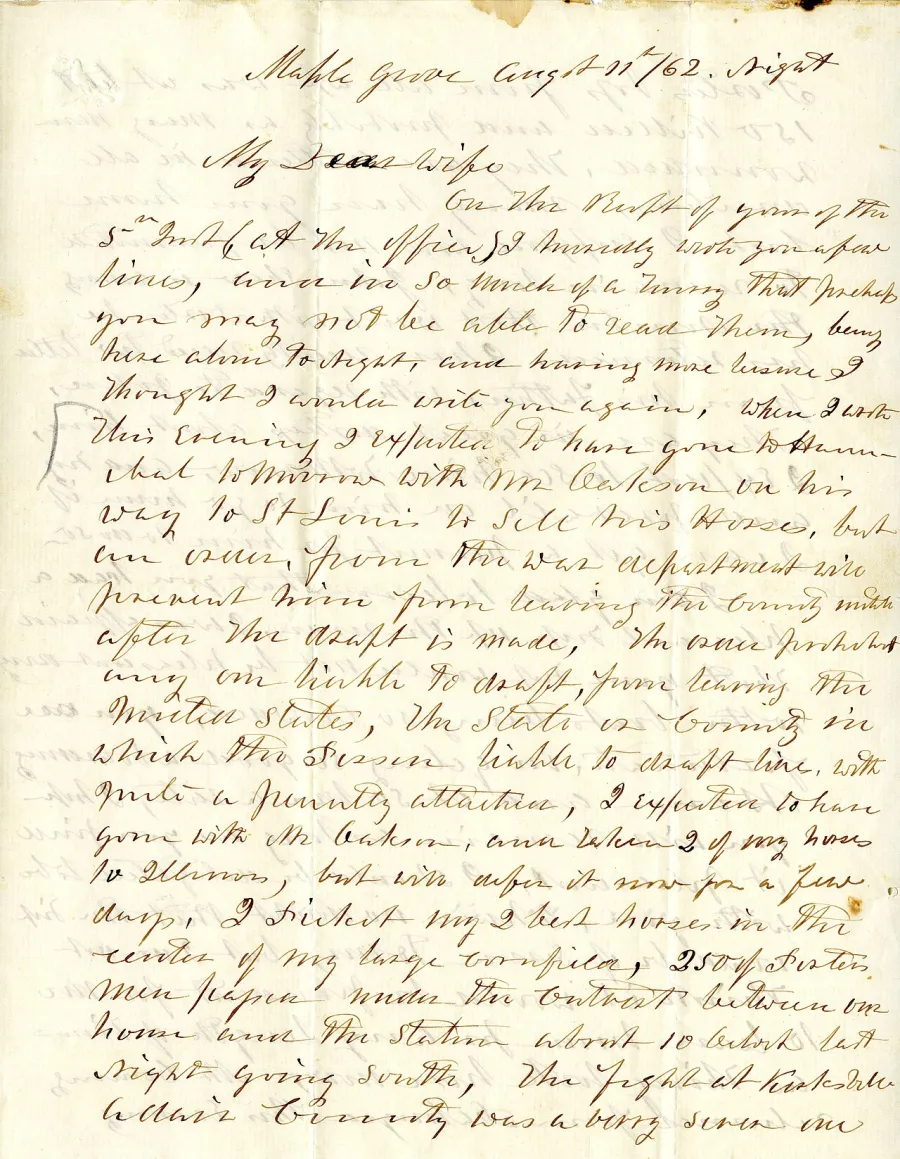

- Input: 1280 × 1647 px JPEG.
- Run date: 13 November 2026.
- Time taken: 31.0 s, measured from request start to response for this single local run (not a speed benchmark).
- Mode: handwriting.
Pressure observation (unedited):
Strokes appear moderately heavy and dark in several areas, although pressure varies and cannot be reliably measured from the photograph.
Pressure reading (unedited):
In traditional graphology, heavier pressure is sometimes associated with determination, energy, and emotional investment. This interpretation is approximate and may also reflect the writing instrument.
Legibility value (unedited):
medium
← Swipe sideways to see all columns →
Letter | Writing tool | Analyzer "Pressure" observation | Pressure-observation caveat |
|---|---|---|---|
Butler | Purple pencil | “moderately heavy and dark” | Qualified: “assessment approximate” |
Civil War soldier | Ink | “relatively dark and substantial” | No caveat |
Warner | Ink | “moderately heavy and dark” | Yes: “cannot be reliably measured from the photograph” |
What the three runs show
The pencil and ink letters were all described as dark or heavy-looking: “moderately heavy and dark,” “relatively dark and substantial,” and “moderately heavy and dark.” By our count, 2 of these 3 Pressure observations included uncertainty; only Warner explicitly limited measurement from the photograph, while Butler's was qualified as approximate. These are illustrative samples, not a representative test. Warner's reading itself says it “may also reflect the writing instrument.”
From a photo, the tool, like any viewer, reads stroke darkness, not force. We could not check the backs of these pages, so the true pressure of these writers is unknown.
Limits of reading personality from handwriting pressure
Graphology’s methods and conclusions are not supported by scientific evidence; Wikipedia’s Graphology article states this and cites studies. A traditional association is not a finding about an individual. Even a physical groove check describes marks on paper rather than establishing personality.
Photos add another limitation: appearance depends on materials and capture settings, so dark strokes cannot establish heavy force. Our handwriting slant guide and handwriting size guide examine other visible features and their limits.
Check your own handwriting pressure
Write five or more lines with your usual pen on a single sheet over a hard surface, at natural speed. Turn it over and gently feel the grooves, checking them in side lighting. Note the pen and paper.
Photograph from above in even light without filters. Try the Handwriting Analyzer, or the Signature Analyzer for a signed name. The photo shows darkness, so keep your pen details and groove check beside the reading.
Handwriting pressure FAQ
What does heavy handwriting pressure mean?
It means a firm push against paper, best checked through indentation. Graphologists traditionally associate it with commitment and taking things seriously. Dark ink alone does not establish heavy pressure or those qualities.
What does light handwriting pressure mean?
It means relatively little force, often leaving little indentation. Traditional readings suggest sensitivity and empathy. Pale strokes can also come from pencil hardness or ink flow rather than light force.
Why do I press so hard when I write?
Grip, pen, habit and surface can all encourage pressing hard when writing. Try a pen that writes with less effort and a looser grip, then compare the back of the sheet under similar conditions.
Can you tell handwriting pressure from a photo?
No. A photo shows darkness and width, not force. All three runs above described substantial-looking strokes, but only two qualified the pressure assessment; none included a check of the back of the paper.
Can you change how hard you press when writing?
Yes. Practice using enough force to make a clear line, with a comfortable grip and a pen that flows easily. Compare grooves using the same paper and backing. Changing a writing habit does not establish a personality change.